Athlete Focus | October 2026
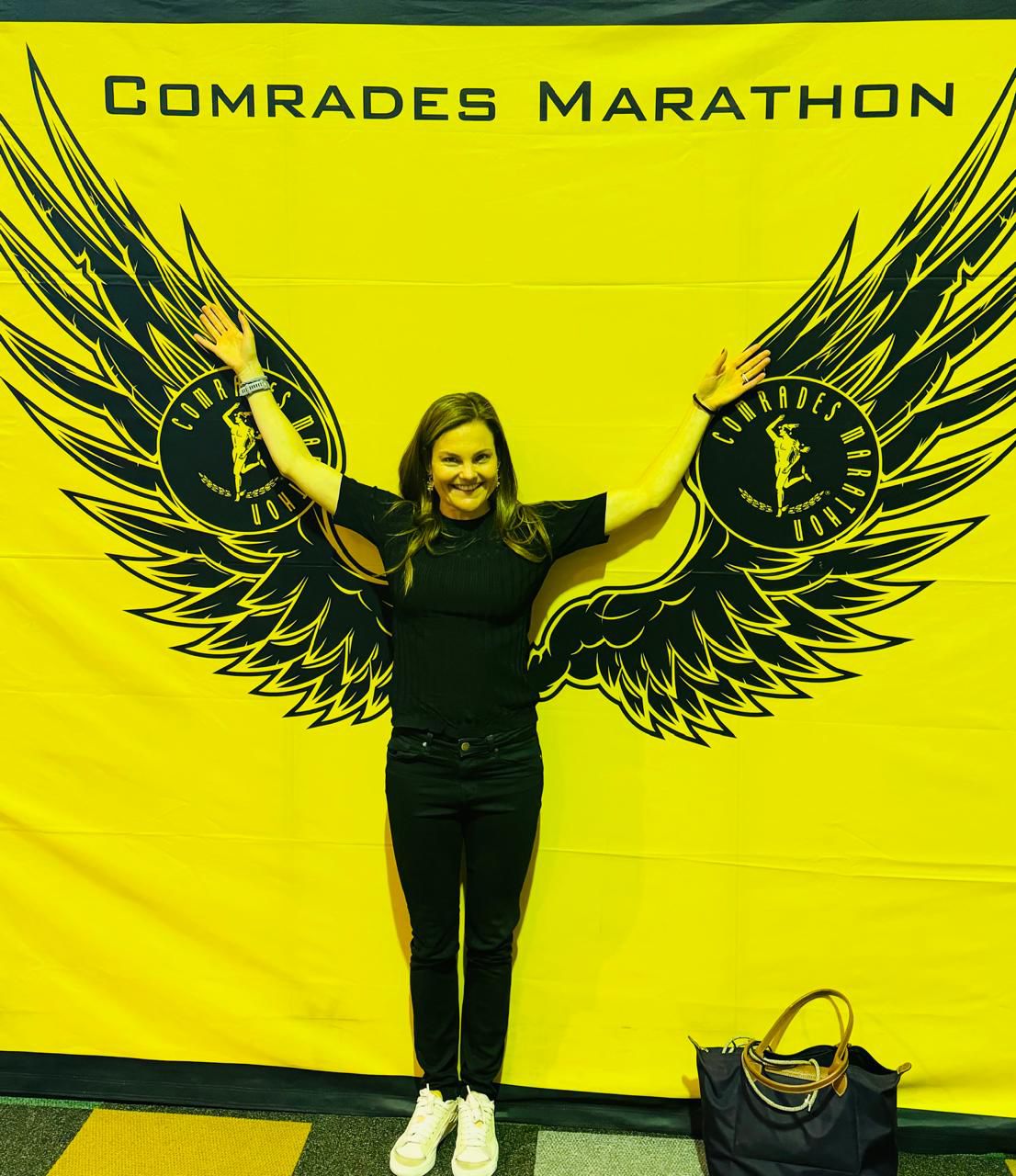
From Recreational Runner to Comrades Silver: Jana Calmeyer’s Journey with FFA
Jana started running for fitness, enjoyment and a little sanity. Today, Jana Calmeyer has completed three Comrades Marathons, run a sub-three-hour marathon and earned a Comrades silver medal.
There is a point in many runners’ journeys when something that once seemed impossible starts to feel achievable. For Jana Calmeyer, that challenge was the Comrades Marathon.
When Jana joined FFA, her goal was to reach the Comrades start line safely and give herself the best possible chance of completing the race. She was not an experienced athlete following a carefully planned programme but rather a recreational runner balancing a full-time job, three children and family responsibilities. What followed was a journey that took her beyond what she had initially imagined possible.
In this FFA Athlete Focus feature, Jana shares how she moved from informal group running to structured training, what she learned through the difficult periods, and why trusting the process became such an important part of her running.
Before FFA: Running for fitness and enjoyment
Jana describes her early running experience as recreational in the truest sense of the word. She ran to stay fit, enjoy herself, clear her head and spend time with friends.
After the birth of her eldest son, she and a friend joined a local running group and began running twice a week. “My goal was simple: keep up. I wasn’t always successful.”
With a full-time job and three children to raise, consistency was difficult. “Most weeks I ran 20 to 35 km, took long breaks after each pregnancy, and never followed a proper training programme. I simply turned up and joined whatever session the group was doing.”
The idea of running Comrades developed gradually. Watching her friends take on the race year after year introduced her to the challenge and the community surrounding it. Their experiences inspired her, but she also understood the magnitude of the distance.
When her youngest child was four, Jana finally felt ready to take the next step. She entered in 2023 for the 2024 Comrades Marathon and knew she needed guidance to prepare properly. A friend recommended FFA.
She joined with one clear objective: to complete Comrades safely. At that stage, she had no idea how far that decision would take her.
What worried her most about taking on Comrades?
Interestingly, Jana admits that she may have been too naïve to have many doubts when she started.
The distance was the obvious concern, but then came another revelation: she would have to eat while running.
Having always run fasted, the prospect of learning about gels, hydration and race nutrition felt almost as intimidating as the distance itself.
Structured training was another unfamiliar territory. Initially, her watch would beep, she would follow the instruction and that would be the end of it. She did not yet understand how the individual sessions fitted into a larger training plan.
Over time, she began to understand the reasoning behind the workouts. The training was no longer simply a collection of runs. Each session had a purpose, and understanding that purpose helped everything begin to make sense.
This was one of the first important changes in her approach to running: moving from simply doing the work to understanding why she was doing it.

Fitting training around work and family life
Training for an ultra-distance event requires considerable time, but Jana’s training did not begin with 10 to 15 hours a week.
She remembers reaching 60 km a week and thinking that she was running an enormous amount. The workload increased gradually until she was running five or six days a week.
She was already running before work and before the children woke up. As the training hours increased, her alarm simply went off earlier.
Being part of a group of runners also helped. Early mornings and long runs became a normal part of life when the people around her were doing the same thing.
Coaching made the training more meaningful. Rather than accumulating kilometres for the sake of it, Jana understood what each session was intended to achieve. She learned to trust the process and found that she genuinely enjoyed training.
There is also a practical reward in making the time count. Jana describes the satisfaction of completing a half marathon before work and carrying that sense of achievement into the rest of the day.
But training does not happen in isolation from family responsibilities. Jana credits her supportive husband for helping make the arrangement work. He takes care of the mornings while she handles the afternoons, allowing them to share the responsibilities of family life.
Her experience offers a useful lesson for runners who believe their circumstances make ambitious goals impossible. Training requires commitment and planning, but it also requires a realistic approach to the life that surrounds it.
As Jana puts it, where there is a will, there is usually a way. When you genuinely enjoy something, you may be surprised by how much time you can find for it.
When training gets difficult: Learning to recover
Not every stage of the journey went according to plan.
Jana’s lowest point came in 2024, following the Cape Gate Vaal Marathon. She had completed her first marathon as a training run in February before racing the Cape Gate Vaal Marathon in March as her official Comrades qualifier.
As a first-time Comrades runner, she was trying to absorb an enormous amount of information and advice. She believed that once the qualifying race was complete, the serious Comrades training needed to begin. Her body, however, had other ideas.
Recovery took longer than expected. She developed a minor illness, struggled to complete the prescribed sessions and felt as though she was falling behind while other runners continued progressing.
Looking back, she recognises that what she experienced was a normal part of training. At the time, though, it was frustrating.
Marcel helped her navigate this period by adjusting her programme and allowing additional time for recovery. He also helped her understand that fitness is not built by forcing workouts when the body is not ready.
Future training blocks incorporated more recovery as well.
This experience reinforced an important principle: a training programme must respond to the athlete, not simply demand that the athlete follow it regardless of circumstances. Progress includes knowing when to train, when to adapt and when to recover.

What changed when she joined FFA?
For Jana, the difference was fundamental. Before joining FFA, her approach was largely to turn up and follow the session everyone else was doing. It was informal, and there was no individual programme built around her specific needs.
FFA introduced her to personalised training that considered her goals, target races, work commitments and family responsibilities.
For the first time, she had a programme designed specifically for her. This helped her become more consistent and, importantly, enjoy the process much more.
Her experience illustrates the distinction between simply being active and following a structured development plan. Both have value, but a programme built around an individual’s circumstances and objectives can give training a clearer direction.
The aim is not just to do more but rather to understand what you are doing and how it contributes to the bigger goal.
The moment she learned to trust the process
Jana does not point to one defining coaching session or a single moment when everything suddenly clicked. Instead, she describes a series of small realisations that developed over time.
Learning to follow a structured programme and becoming comfortable with the technology were challenges in the beginning. She had never used a personalised training plan before, so understanding how the different sessions fitted together took time.
Comrades preparation also requires patience. There are qualifying races, tune-up races, recovery periods and the gradual build towards race day. During this process, it can feel as though you are not doing enough or that everyone else understands something you do not.
For Jana, the real breakthrough came after her first Comrades.
The day was much harder than she had expected. Yet when the race became difficult, her body responded to the preparation she had completed. She finished within a minute of her goal time.
That experience helped her understand something that had previously been difficult to appreciate fully: the fitness and durability had been developing throughout the training, even when she could not always see or feel the progress.
She had to learn to believe in the work she had done.
Trust the process became more than a coaching principle. It became something she had experienced for herself.
What she is most proud of
Since joining FFA, Jana has achieved things she once would not have considered realistic.
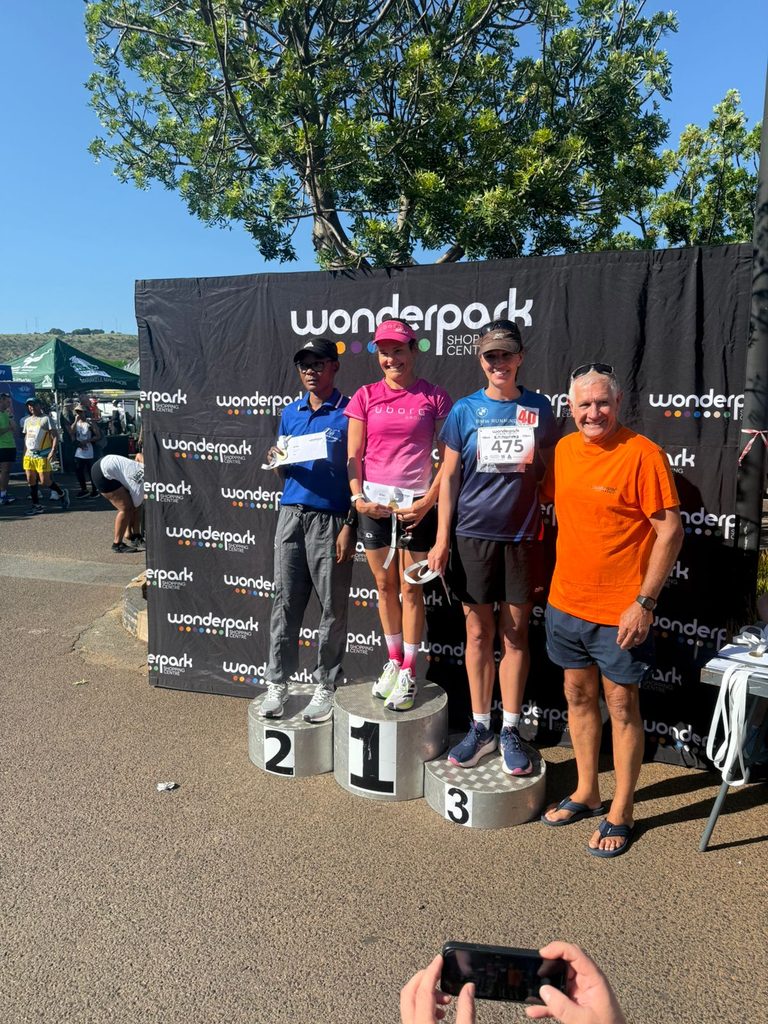
Her milestones include completing her first Comrades Marathon, running her first sub-three-hour marathon and earning her first Comrades silver medal.
Each achievement was special, but if she had to choose one, she would return to that first Comrades.
It was the furthest she had ever pushed herself, both physically and mentally. Once a runner moves beyond 55 km in a race, the experience becomes unfamiliar territory. The body is tired, the finish is still some distance away, and the challenge is no longer just about running.
That day taught Jana that both her body and her mind were more resilient than she had given them credit for.
She achieved her original goal of becoming part of the Comrades Marathon and the extraordinary community surrounding it. More importantly, the experience gave her the confidence to pursue bigger goals.
For Jana, that confidence is more valuable than any single finishing time or medal.
Her greatest achievement has been discovering that she can do difficult things.
Three Comrades races and a plan that worked
Race planning is an important part of preparing for an event as demanding as Comrades. Jana went into each of her three races with a Plan A, Plan B and Plan C.
Remarkably, all three finishes came within a few minutes of Plan A.
Even she is not entirely sure how the plans worked out so accurately. Her explanation is refreshingly simple: she followed the programme and arrived on race day ready to run.
She gives Marcel credit for the planning behind those performances.
There is an important lesson here about preparation. A race plan is not simply a target time written down before the event. It is supported by months of training, preparation and decisions made well before the starting gun.
The plan gives the athlete a framework to work with, while the training helps prepare them to execute it.
When Comrades gets really hard
Ask Jana about the hardest moments during Comrades, and she admits that the intensity of the experience makes it difficult to recall every detail clearly.
Beyond the thought that “this is hard”, she remembers trusting that she had done the training and refusing to lose momentum, even when she had to walk.
That ability to keep moving matters when the distance becomes overwhelming but for Jana, the hardest parts of Comrades are not necessarily physical. They are often emotional, particularly when she does not see her family where she expects them to be on the course.
During the race, she is frequently thinking about when she will next see her husband or family. Those moments of connection matter during an exceptionally demanding day.
There is also something revealing about what happens after the race. Runners spend months preparing, experience an intense day on the road and then spend time trying to understand exactly how they managed it, often with the intention of doing it again.
Jana’s account captures both sides of Comrades: the physical challenge of covering the distance and the emotional experience of getting through it.

What goes through her mind at the finish line?
After such a long day, you might expect an athlete to have a clear memory of the first person they thought about when crossing the finish line.
For Jana, the experience is less straightforward.
During the race, her thoughts revolve around when she will see her husband or family again. At the finish, however, there is a sudden shift as the effort comes to an end.
She describes it as a bit of a bom skok when the race is over.
By that point, she is physically and mentally exhausted, with too much to take in at once. She does not remember thinking about any particular person or anything specific immediately after finishing.
The appreciation often comes later, once the intensity has passed and she has had time to reflect on what she has accomplished.
It is a reminder that significant sporting achievements are not always fully understood in the moment. Sometimes, the meaning of the experience only becomes clear afterwards.
What would she tell someone who believes Comrades is impossible?
Jana’s advice to someone who thinks they could never complete Comrades begins with a simple question:
What can you do now?
She believes that if you can run 5 km, you can train for 10 km. If you can run 10 km, you can work towards a half marathon. If you can complete a half marathon, you can build towards a marathon. And if you can run a marathon, you can prepare for Comrades.
The important thing is not to focus on the entire journey at once.
Looking at the full distance and everything required to prepare for it can be overwhelming. Jana prefers to focus on the next step: understand what you can do today, and then see whether you can progress from there.
Her advice is simple: find out what you are capable of, and give it a try.
She also believes strongly in the influence of the people around you. Being part of an incredible group of women and a supportive running club has helped her see ordinary people achieve extraordinary things.
When you regularly witness others working towards and achieving ambitious goals, those goals can begin to feel less intimidating. You start to consider that perhaps you can do it too.
Comrades, she says, has a way of making you believe you can do anything.
Beyond the finish line: What Jana’s journey teaches us
Jana’s story began with a modest goal. She wanted to run Comrades safely, and she sought out coaching because she understood that preparation mattered.
She did not begin with years of structured training, a background in competitive athletics or an established belief that she could achieve everything that followed.
Instead, she built her experience gradually. She learned to follow a programme, understand the purpose of individual sessions, adjust when recovery took longer than expected and trust the preparation when the race became difficult.
She also found a way to integrate training into the practical realities of family life, supported by her husband, her running group and her coach.
Her journey highlights several lessons that extend beyond ultra-distance running:
- Start with what you can do. You do not need to be capable of the final goal before you begin working towards it.
- Give your training direction. Understanding why you are doing a session can make the process more meaningful and help you remain consistent.
- Allow for setbacks. Illness, fatigue and slower-than-expected recovery are part of the process. Adjusting intelligently can be more productive than forcing the programme.
- Trust gradual progress. Fitness and resilience develop over time, and their value may become most apparent when you face a difficult challenge.
- Build a supportive environment. The right coach, training group and family support can make ambitious goals more manageable.
These lessons are relevant to runners at different stages of their development. Whether the objective is a first 10 km, a personal best, a marathon or Comrades, progress begins with an honest assessment of where you are and a realistic plan for where you want to go.
Jana’s achievements are remarkable, but her starting point is what makes her journey particularly relatable. She began as a recreational runner with a busy life and a goal she wanted to pursue safely.
She took the next step, learned along the way and discovered that she was capable of much more than she had initially imagined.
For anyone sitting on the sidelines wondering whether they are ready to take their running further, her story offers a useful place to start.
You do not have to see the entire journey clearly. You just have to identify your next step.

About FFA
FFA is committed to supporting athlete development through structured training, individual progress and a learning-focused approach to sport. Every athlete has different goals, abilities and circumstances, and a development programme should recognise those differences.
If you are a runner or parent exploring a more structured approach to athletics, you can learn more about the FFA programme and the opportunities available to athletes.
Interested in taking the next step? Visit www.fitnessfromafrica.co.za to learn more about FFA and get in touch about joining the programme.